
AIR SAIN / SCHOOLS & MUNICIPALITIES
Better air in classrooms. Clear evidence of summer overheating.
Air Sain helps schools and municipalities understand classroom ventilation during the heating season and document temperatures during hot periods, through targeted readings, monitoring and clear reports.
01 / THE CONTEXT
Understanding occupied classrooms
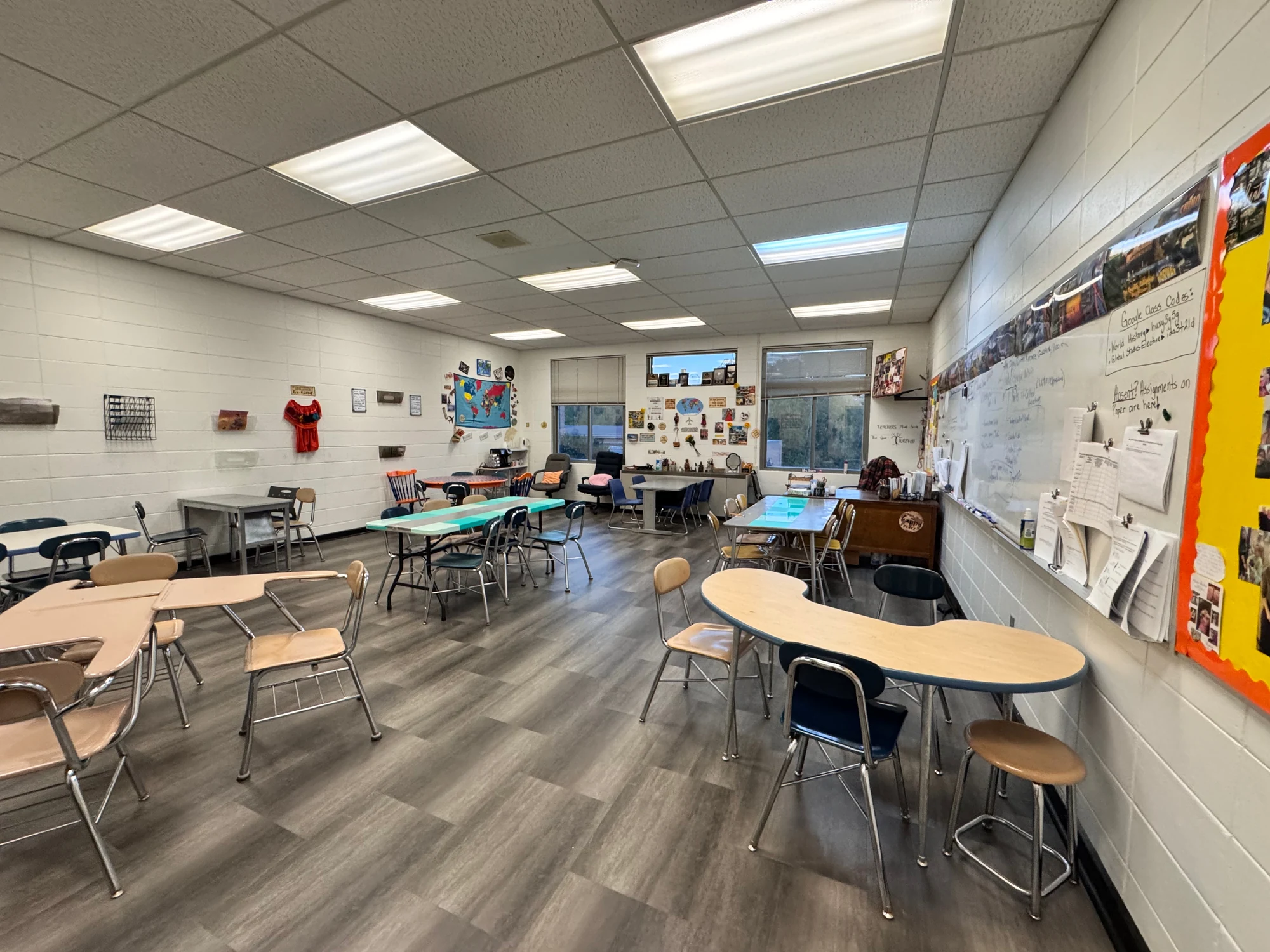
In an occupied classroom, indoor conditions change quickly. Pupil numbers, breaks, window opening, heating and sunlight all influence the readings. An assessment needs to capture the school day, not just a snapshot taken in an empty room.
Our monitoring can make patterns visible to school leaders, municipal building teams and property managers, with graphs that help decide what to improve.
Measurements during school hours, with results explained in the context of each room.
02 / HEATING SEASON
In winter: ventilation and indoor air
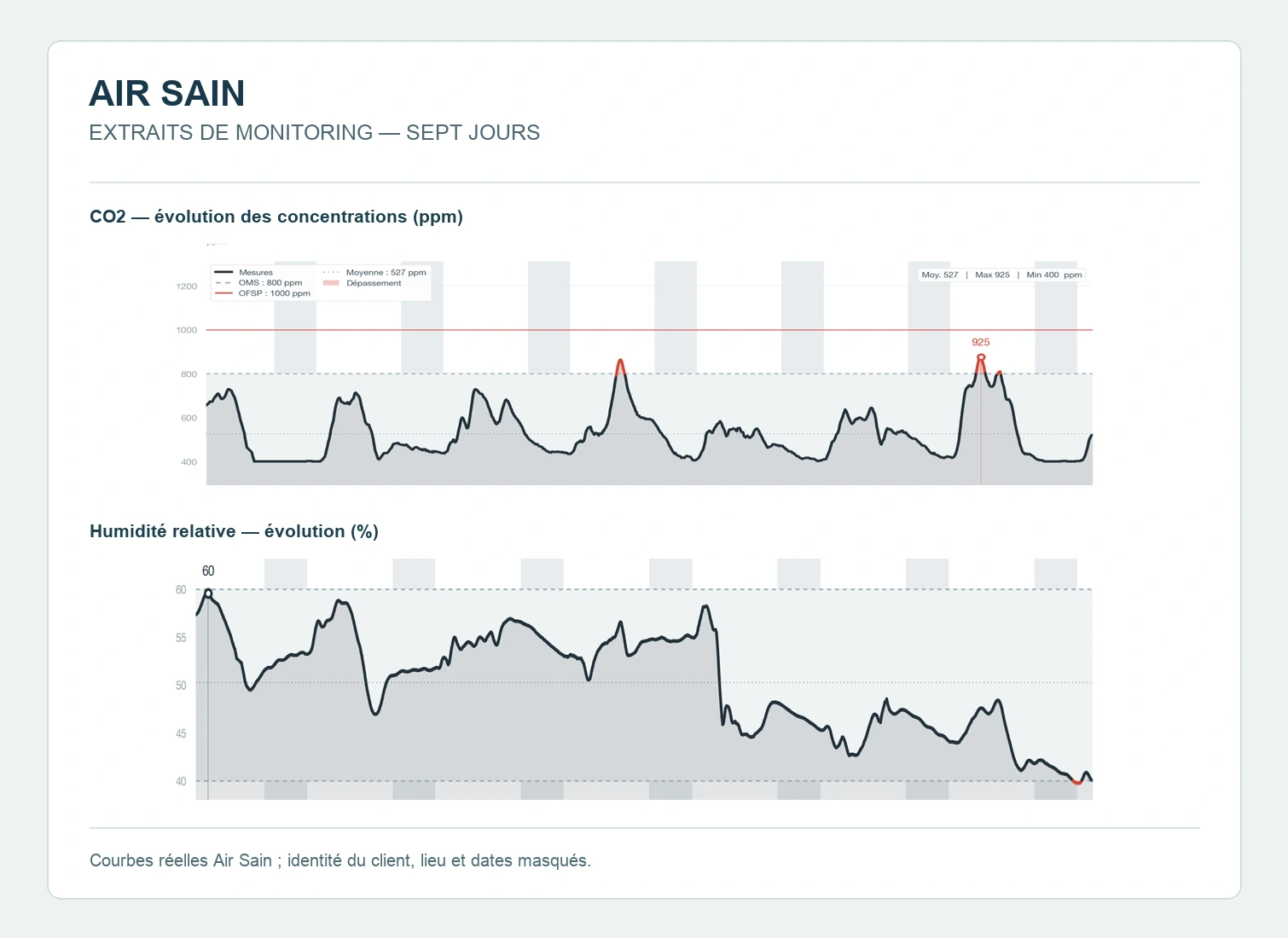
A classroom filled with students can accumulate CO₂ over a lesson. Monitoring CO₂ levels, temperature and relative humidity over consecutive school days helps show when air exchange is most needed. Monitoring can also provide indicative readings for fine particles, total VOCs and formaldehyde. Carbon monoxide (CO) is a different gas from CO₂ and requires its own suitable detector.
CO₂ and ventilation
View CO₂ changes during lessons and breaks, and identify periods when ventilation needs attention.
Particles and indoor conditions
Look at fine particles, temperature and humidity where these parameters are relevant to the school building.
TVOC and formaldehyde indicators
Monitor indicative readings and trends without presenting them as a chemical identification of the compounds or their source.
03 / SUMMER COMFORT
In summer: document classroom overheating
Repeated temperature readings make it possible to see what happens during heat waves: daily peaks, the number of hours above a chosen threshold, morning temperature, afternoon overheating and cooling overnight. These graphs can support discussions about shading, airing strategies and building improvements.
How often does the room exceed 30 °C?
Count the hours above 30 °C or another agreed temperature level, without confusing this with a universal legal limit.
When does it overheat?
Identify the warmest rooms and periods, with comparisons between weekdays and different positions in the building.
Does it cool overnight?
Look at night-time cooling, morning temperatures and the effects of opening windows or shading.
04 / OUR METHOD
From the visit to a clear report
Define the goal
Select classrooms, the questions to answer and the dates or school periods to follow.
Install the monitors
Place the monitoring instruments in agreed locations and record the selected parameters.
Review actual conditions
Compare the records with occupancy schedules, airing and weather or heat-wave periods.
Present usable findings
Share graphs, notable periods and practical recommendations for the school or municipality.
05 / THE FINDINGS
A clear record of what happened
The report can show trends over the agreed period, periods of elevated CO₂ or temperature and the duration of exposure above a reference level chosen for the assessment. The findings are interpreted in the context of room use.
TVOC and formaldehyde sensor readings provide indicative trends, not the identity or source of individual pollutants. A specific chemical identification would require a separate laboratory procedure.
06 / FAQ
Common questions from schools
Can several classrooms be monitored?
Yes. The assessment can compare rooms across different floors, orientations and uses, with the chosen duration and parameters.
What about CO, formaldehyde and VOCs?
Routine monitoring can show indicative changes in TVOCs and formaldehyde. CO is distinct from CO₂ and requires a specific detector. Detailed chemical identification is not part of routine monitoring; exceptional laboratory work would require a separate request and quotation.
Can a temperature report prove that a classroom exceeded 30 °C?
Recorded data can document the duration and frequency of measured temperatures above 30 °C. This is evidence from the monitored period, not a universal legal certification.
AIR SAIN / CONTACT
Tell us about the situation.
Tell us about your classrooms, the season of concern and any observations from staff. We can discuss a focused investigation.